Showing posts with label games. Show all posts

Sunday, 20 April 2014

Personal Enquiry 3: Emotional Storm

   In my preceding blogpost, I discussed how technological advancements have evolved the realism of games, and how now realism and story go hand in hand, so they evoke genuine feelings from the player. Storytelling, to me, is a very important hook in a game, and elicits a more genuine interest in the game's completion. In this blogpost, I will be firstly reiterating the previous points I have made, but also exploring the question... If games are becoming ever more realistic, why are old console games so popular now? I will also attempt to touch upon where I think games will progress from now, and if it will be a good thing?
   The element of storytelling, as I have said, is one of vital importance, in my opinion. Games are becoming more and more the forefront of entertainment, becoming as popular as and being inspired by the cinematic world. I was reading an interesting article about video game storytelling, and the author raised an interesting point. 

   "To get shamelessly bio-psychological for a moment, narrative is simply how human beings perceive and interpret the world around them as an ongoing, relatable place. Without the ability to imprint events with a storyline, the world would just be a bunch of stuff happening all over the place. Simply, whether Neanderthal caveperson or modern, Facebook worshipping technophile, story and storytelling link the world experiences of pretty much every human there’s ever been." - David Houghton

   I think this is a thought provoking statement, and one I agree with. It's an indicator to how, as people, games, just like films, books, the media, etc, will always be perceived with the thoughts and emotions of the events of the game whilst playing. If we look at a game like To the Moon, this is a prime example of how the events in a game can affect us personally in a very emotive way. 

Freebird Games (2011). To the Moon. [Download] Windows, OS X, Linux. Freebird Games.

   I've never played this game personally, but I have watched the entire play-through on YouTube, and if I remember rightly it made me cry. (I know, I know. So I'm a sap.) To the Moon tells the tale of two doctors who, using futuristic artificial memory technology, navigate their way through the dreams and memories of a dying man to fulfil his life's wish. This kind of disproves my earlier statement about how realism influences more of a storytelling element in games, due to this game being a 2D kind of RPG game. There isn't a tonne of gameplay in this, but the storytelling aspect is sophisticated enough to compensate for that. This game is as story-driven as it gets really.
   But hey! I still think realism plays its part. Just, remembering this game has made me realise that it isn't just realistic games that have strong storytelling elements, and that it's more about how they're executed. The thing with To the Moon is that it's not an entirely predictable storyline. You might make assumptions in your head as you go along, but there is an air of mystery surrounding the story in some parts that makes it difficult to foretell the outcome. 
   On the more realistic side of the spectrum though, is the Last of Us. Now, I haven't played it myself, but I've heard a lot from others who have that it is quite a storm of emotions for its audience. 

Naughty Dog (2013). The Last of Us. [Disc] PS3, PS4. Sony Computer Entertainment.

   I remember watching a small section of the game, and I almost remember crying the first time I watched the beginning. 
   Yeah.. I definitely did. I just watched it again, and oh how the tears fell. It's so beautiful though, I think I need to play this. 


Naughty Dog (2013). The Last of Us. [Disc] PS3, PS4. Sony Computer Entertainment.

   I think it's good that a game can extract emotions like that from you. And emotions like fear (which personally, I will always feel when playing a game involving the theme of zombie apocalypse. *shudder*.) I think that this evokes a certain engagement in the game and an investment in the characters, that you really want them to be okay.

   Which brings me to the point of, if games are evolving all the time and becoming ever more realistic, why are older games becoming ever more popular? Well, I think there is a certain charm and character to the more 'vintage' styles of gaming. There will always be those nigglings of nostalgia that force you to dig out your old consoles and re live your childhood. This is the very reason the Playstation 2 still has pride of place next to my TV on my dresser, because it holds as many of the games that make me happy as any of the newer consoles I own. 

May I direct you to just a few of the games that made up my childhood.

   Even further back than that though, games like Space Raiders and Pac-Man, now seem to be sort of pop-culture, indie fashion statement. You can get all sorts of merchandise and clothing depicting these games, and a lot of the people who own these things probably have little to no experience actually playing the game. They more kind of seem to be a statement, to indicate oneself as a gamer, or expressing a fondness for the 'geek-chic'. Not that this is a criticism, as I haven't exactly spent a vast amount of time playing these games myself. I can see why they've become a fashionable pop-culture reference anyway, because they're iconic games and highly recognisable. Besides, you've got to admit, they're kinda cool looking anyway.

Omg like, so retro.

   My feelings are mixed on this. Yeah, they do look pretty cool, but my opinions are the same with this as they are with band shirts. Only wear what you love. Don't go around wearing a Rolling Stones shirt then asking who Mick Jagger is. 

   Which brings me to my last point of conquest. The future. I honestly don't really know what the future holds for games. I'm hoping that everything doesn't become too co-op based. I don't think it ever will, because certain games will always call for single player, and personally I think there is a definite charm to playing alone. A different kind of absorption. 
   When it comes to the future of story telling in video games, the future seems unsure. Are games becoming too 'Hollywood'? In another interesting article, there are some good points made.

 "Movies will always be influential in some way. But hopefully the industry will stop being influenced by the same type of movies and TV.  We could probably do with taking a few steps away from the whole Tarantino/Sopranos love-letter which still seems to be doing a brisk trade in the industry. There’s nothing intrinsically wrong with either of those things, it’s just that so many seemed to be drawing from the same wellspring. Although in fairness I think 2013 was a particularly innovative year. Personally, I’d like to see games being influenced by a more diverse range of media:  books, real-world events, theatre or comics etc." - Rhianna Pratchett (Tomb Raider Lead Writer 2013)

   I think that would be awesome. I agree that it'd be interesting to see a more diverse range of influences for games. Especially books, as this one is something that doesn't seem like it'd be covered much. It would be an interesting way to convert a book into something more visual, instead of jumping straight to film development. I think this would be also a good push for games developers, because they'd have all the descriptions, but the concepting would come from research and their interpretation of the words written on the page. High hopes to what the future will bring!


Sunday, 30 March 2014

EGX Rezzed!

   This weekend has been a really good one. I've thoroughly enjoyed it, going home and seeing my family, and going to Eurogamer at the NEC Birmingham!


   I bought a ticket for the Saturday, and had a brilliant day of going to developer talks, playing games, and checking out the merchandise. My only real regret about this day was that, as I found out far, far too late, two of my favourite members of the Yogscast were there. I didn't pay extra to meet them, because by that time, these tickets had sold out. *Sigh*. It was still a brilliant day though.


   The first developer session I went to was about Dying Light, given by Maciej Binkowski. I'd watched videos about this game before, and the talk re-sparked my excitement towards it! Maciej talked about how players would experience a new way of playing, with the Natural Movement System. It's a survival horror game which heavily incorporates a lot of parkour style climbing and such. If something looks like you can climb it, you can. During the day, you can go about your missions, gathering resources and so on, and at night, you simply need to stay alive until day time. The thing is, at night, the 'zombies' change, and can run and climb just as fast as you can. Here's a video of the game from IGN.


   After this, we looped straight back round to queue for the next session! This was for the game Alien: Isolation. I didn't know much of this game before the talk, but I'm very glad that my boyfriend had wanted to go because I am now very excited for it too. The developers wanted to capture as much as possible the original essence and atmosphere as the 1979 film, with the same suspense that keeps the audience on edge as the crew desperately evades the dark threat of the Xenomorph. This exciting, survival horror game has also been announced for release on the 7th of October 2014! 


   After this, we started to wander around the hall, seeing what was there. There was an awesome section for retro games, and there seemed to be a section for every console ever made, even old pinball machines! There were plenty of really amazing looking games there, but there were two in particular that caught my eye. 


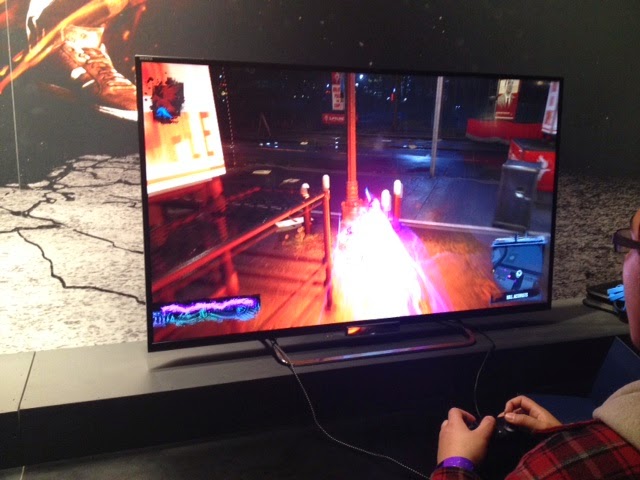
   The first was Infamous: Second Son, which was visually very striking. Neither of us unfortunately for a chance to play it, because we were both ultra British and too polite to push forwards or express to the guy spending way too long playing through the ENTIRE demo that it was now our turn to give it a try. 'Really gotta' work on that...
   Either way, what I watched of it looked awesome. Here's a trailer for this one also.


   The other was Murdered: Soul Suspect, which is due for release on the 6th of June this year! Just in time for Summer! So I am 100% getting this game. Here is a trailer for it.


    This game is about some one who was murdered, trying to track down his killer. I think this seems like a brilliant idea for a game, and I am really drawn to the dark, supernatural visuals of this detective thriller. Playing it was brilliant too, it was a lot of fun and I was instantly pulled in to the storyline. I definitely want to play more.

   I really enjoyed this event, I will definitely be keeping an eye of what's going to be on at the London Eurogamer in September!


Sunday, 23 March 2014

Gladiators!

   Last week marked the end of the Gladiator project and the beginning of more stressful beginnings. Meaning, we are now learning how to use UDK.

   Back to the Gladiator though! I adored this project! Apart from rigging. That can go away. I think part of the reason I enjoyed this project so much though was because I was starting to incorporate some of the concept and design techniques that I had learnt in Visual Design. I started by researching classes of gladiators and creating inspirational mood boards to help me whilst designing my own.


   From here, I started creating some simple designs to build on, picking my favourite variation and taking it straight to orthographic designs. I was working out the problems as I went along where possible, but I didn't want to labour too long on these possibilities because I knew that time was draining away with this project. 


   I drew a very quick digital final, eager to get on with my model. I enjoyed the modelling process, because I feel I am becoming quite comfortable with that now. It certainly doesn't cause me the same stress that it did in the beginning! UV unwrapping was a bit tricky at first, but that worked out fine too and I was really proud of my textures once they were done. The design of my model changed in very minor ways as I went along, so I did another final piece. I spent longer on this, and drew it to look like the model I had created.


   The only thing I really didn't get on with was rigging. That's unfair, I suppose. The main problem with rigging was that it felt kind of like treading on eggshells. The labs were filled with voices of 'Whatever you do! Don't collapse the skin modifier!' and someone groaning when trying to reset the x-form and the model practically imploding. Those groans may or may not have been from me. 
   I think that really, like with the rest of Max, I will become more comfortable with it in time, and with practice. Which is what I intend to do! Practice practice practice!


   This is a final presentation of renders for my model for this project. I am most proud of the textures on this model, and although it isn't perfect, I can honestly say I have enjoyed this project more than any other in Game Production so far and raised the question in my head... someday, could this be what I want to do? Be a 3d character artist? I would have to practice like crazy to nail the rigging down to a T, but conceivably, I think it would be something I would enjoy doing, and is something I'm starting to consider for the future.


Sunday, 2 February 2014

Critical Studies: Then to Now - Part 4

   1998 saw the beginning of the sixth generation era of video games, or the 128 bit era. These are the consoles that shaped the childhood of most people my age, with the major contenders being the Sony PlayStation 2, Sega Dreamcast, Microsoft's Xbox and the Nintendo GameCube.


   The Sega Dreamcast was the first to come, being released in 1998, appearing as some sort of peculiar hybrid between the Nintendo 64 and the PlayStation. It was Sega's attempt at a comeback from the fall of Sega Saturn, and even though it had a largely loyal following, it sadly didn't last that long, being outweighed by the staggering sales of the PS2. It had quite a lot of big name titles though, such as Sonic Adventure, Soul Calibur and Marvel Vs Capcom, but sadly the last official games were released in 2002.


   Which brings us to the PS2. In my opinion, the PS2 could easily be one of the best consoles so far. The PS2 was released in 2000 and has only recently been discontinued, as of January 2013. In this time, it sold over 150 million units, making it the best selling video game console in history. I still have and adore my PS2, and if it ever breaks you can be sure I'd get another. The PS2 holds a vast amount of my all time favourite games, one of which, Dark Cloud.
   I personally discovered Dark Cloud by chance on the demo disc that came with the console. To me, this game is shockingly underrated. It has been quoted as 'Sony's answer to Legend of Zelda' and I kind of see the connection, even though I am not a massive fan of the Legend of Zelda myself.
   

    This is a trailer for Dark Cloud. The aim of the game is to rebuild the eastern part of the world which has been left in ruin by the Dark Genie, and you do this by battling through dungeons and various boss battles to save the villagers of about 7 different areas and restore their homes to how they were before. Playing it now, it's easy to see obvious flaws in models and textures, however I still find the gameplay incredibly absorbing. 
   I loved the sequel too, as it had the same fundamental idea as the first game, but a lot more in depth. 


   I've never owned the original Xbox, however I have a lot of fond memories of playing Halo 2 with my cousins. When production of this machine was first announced, people were skeptical and a lot of people scoffed at the idea, but Microsoft shocked them all as the Xbox's popularity soared.
   Bill Gates proposed that the Xbox would be three times as powerful as the PS2 and would 'transform the way we consumed electronic entertainment.' Quite a hefty claim considering it was Microsoft's first launch into the console market. 
   The Xbox also popularised the use of playing console games online with the release of Xbox live in 2002. It competed with Dreamcast and PlayStation 2's online services and while these were free and Xbox live is subscription based, Xbox live was more popular because their servers were far better. Also, games like, for instance, Halo 2, made Xbox live incredibly successful.


Which brings us to the Nintendo GameCube. Okay, to start with, how cute is this machine? It is so easy to see that the obvious target audience for this console is children, proving Nintendo's reputation for producing the friendly, family based console on the market has been prevalent for a good while. Nintendo used a similar idea as the 64 with the ability to transfer information between the console and the handheld GameBoy Advance. This worked by use of a GBA cable, which allowed you to use it as an input system, or exchange data or even unlock new levels. With this console, you could also have bought a broadband adapter which allowed you to connect the machine to the internet and play online with your friends.

   2005 brought us the 7th generation of home gaming consoles, with the competition being narrowed down to Microsoft, Nintendo and Sony. It's widely considered Sony and Microsoft are the only real contenders, however Nintendo are ever reliable for there friendly, loveable approach to gaming. I personally love Nintendo (mostly their hand held machines I will admit), but the thing I love about Nintendo is that the game franchises they are most famous for are the ones they have been most famous for since the beginning. Mario Brothers, Pokemon and even relatively newer titles like Animal Crossing.

   The Nintendo Wii, released in 2006, was immensely popular, although it took a while. In 2012 it surpassed Playstation 3 and the Xbox 360 in world wide sales. I don't think this is surprising though, because in my opinion it was quite a new, innovative machine. It was revolutionary because it more so introduced the idea of using consoles for exercise. I mean, it had been done before, of course, with DanceDanceRevolution and the Combat Pad for Dead or Alive 2, but not nearly on the same scale. With the Wii, it was actually FUN to use as an exercise tool. It was great to use for family party games aswell, but, if I'm honest, I never found it fun to actually PLAY anything on it, by myself. It just never really did it for me. However, by no means do I think this made it less viable than the Xbox 360 or the Playstation 3. Just fun for different reasons. Also, the Wii was a beautiful step up in console design from its predecessor, with a lovely classic white which Nintendo has become quite well identified for.
   I'll be one of the first to admit that I am INCREDIBLY lazy when it comes to exercise. I don't like competitive sports, or going for a run (other people can see, ugh). The gym is okay I guess, because the other people are there to exercise too, but the wii kinda took away the need. It sounds silly to say that you're going on a console to do exercise, and although a lot of people just use their wrist to complete things (CHEATING, MAY I JUST SAY.. naughty) if you actually put effort in it can be worthwhile, with things like the WiiFit, and the release of Zumba dance routines. 


   Wii Party, is a fun family game that would NEVER be fun playing by yourself, but is actually a lot of fun playing with other people. Something that actually brings out my competitive side, wow! 

   The Xbox 360 was released in 2005, and originally bore no resemblance to the original Xbox, being white and grey, at least until the release of the Xbox 360 Slim in 2010, which undeniable more beautiful. It was quieter, with touch buttons and was built to ward off the hardware failures that the white and grey model had.
   I myself love the 360, as there are a lot of my favourite games on this. For the most part they're available on the PS3 and PC as well, but the Xbox 360 is what I have console wise (which has been a source of great regret to me with releases like 'The Last of Us'). 
   In 2010, Microsoft released the attachment for the Xbox 360, the Kinect. Now, okay, this is a matter of opinion, but I never rated it all that much. Some may argue that it's better than the Wii, because of the fact you don't need a controller for the motion sensor, but when I was playing on it I just felt a bit awkward and lumbering, and that it never had the same jovial charm as the Wii.


   The Playstation 3 was released in 2006,  and although it has a lot of games shared between this console and the Xbox 360, I've noticed in a few, like Elder Scrolls V: Skyrim, for instance, that it's not quite as good quality graphics as the Xbox 360, same as neither has graphics as good as the PC. 


The good point about the Playstation 3 over the Xbox is that its online servive, The Playstation Network, was free, whereas the Xbox Live wasn't, if you wanted to play with others.

   Which brings us the most current, the 8th generation. This current gen was kicked off in 2012, with the release of the WiiU. 


The Wii U has a fairy nice design, sticking with their futuristic white gleam (although it is available in other colours, this one is the most identifiable as Nintendo). The idea of this console was to change the way games are played. It was to add new perspectives to gaming and see things on multiplayer that others can't. 
   I feel like this is an okay idea, but personally I would just end up sticking to watching the one screen half the time. Sadly, compared to the Wii, the WiiU did terribly in terms of sales, selling about 150,000 units in the UK, forcing Nintendo's top executives to take up to 30% in pay cuts. In its existence, it has failed to sell more than Sony and Microsoft's consoles did in mere months. 


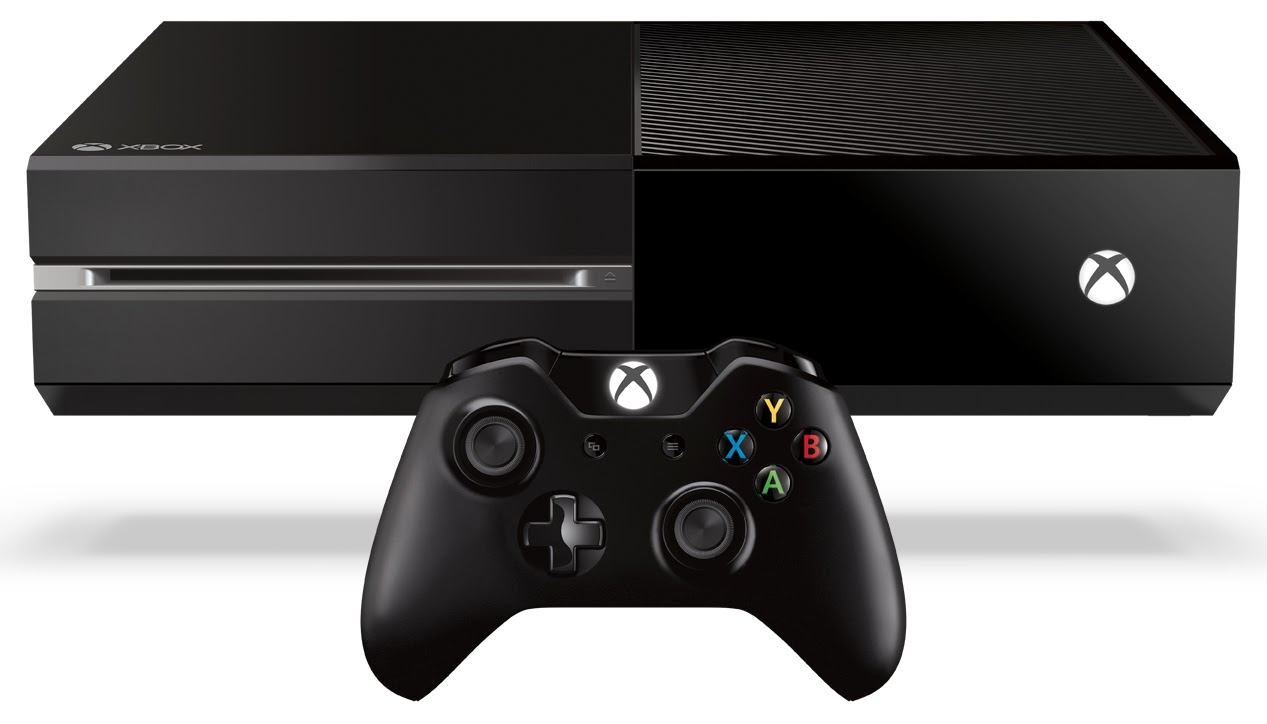
   It's widely agreed that the major competition is between the Xbox One and the PS4 and has been a subject of widespread discussion and dispute for a long while. The Xbox One was released November 22 in 2013, with the PS4 following shortly after on the 29th (EU). Both sold extremely well in the months to follow, but one sold slightly better than the other, with the PS4 to Xbox One now sitting at ration of 1.5:1 of sales in the UK.  Consoles have come a long way, and are improving and growing all the time. Looking at some of the newer games for the recent 8th gen consoles, they are absolutely beautiful. I also still find quite a lot of charm in the old consoles though, and I think it is a good idea to still revisit these often, as they are a strong nostalgic reminder and there is much we can still learn from them. 


References:
  • http://en.wikipedia.org/wiki/History_of_game_consoles_(sixth_generation)
  • http://venturebeat.com/2013/05/17/consoles-that-wont-die-the-sega-dreamcast/
  • http://en.wikipedia.org/Playstation_2
  • www.computerandvideogames.com/131066/hardware/the-complete-history-of-xbox/
  • www.wikipedia.org/wiki/xbox
  • www.nintendo.co.uk/corporate/nintendo-history/nintendo-gamecube-627129.html
  • www.en.wikipedia.org/wiki/wii
  • www.en.wikipedia.org/wiki/xbox_360
  • www.techradar.com/reviews/gaming/games-consoles/xbox-360-703247/review
  • www.en.wikiedia.org/wiki/Playstation3
  • www.nintendo.co.uk/wii-U/Hardware-features?Hardware_Features_660145.html
  • www.theguardian.com/technology/2014/jan/31/wii-U-mobile-nintendo-video-game


Saturday, 4 January 2014

Critical Studies: Then to Now - Part 3

   The year 1990 started the 4th Generation Consoles, with SNK releasing their first console, NeoGeo.

The NeoGeo was marketed and released not only as a home video game console, but also as an arcade system board, the 'MVS' (Multi-Video System). The MVS took cartridges, which allowed the arcade operator to play multiple games through a standalone machine. It could hold 4 games at once and you had the ability to switch between them. SNK also saw through the insightful idea for the NeoGeo, of a memory card, so gamers could save their game in an arcade and take it home etc. Although this was an incredible feat of a machine, it had one major drawback... the price. Launch cost of this console was a whopping $650, with cartridges reaching prices as high as $200.
   It's two main competitors were the Sega Megadrive and the Super Nintendo Entertainment System. The NeoGeo was a slight third wheel in this sense, because of the domination of Sega and Nintendo's rivalry.
   1990 saw the Japanese release of the Super Nintendo Entertainment System (SNES). It was a massive improvement on its predecessor and had sold an estimated 50 million units. It played host to games such as..

...Super Mario World,


...Final Fantasy VI


...and Street Fighter 2


    The Sega Megadrive was released in Japan in 1988.


It's believed to be Sega's most successful video game console, selling 35.3 million units. It lost the competition with the SNES for global market attention, however was still a highly popular machine, marketing well known titles such as Comix Zone (an awesome game based around a comic book artist fighting his creations in an innovative comic book style), Castlevania, Streets of Rage 2 and of course Sonic the Hedgehog 2.


   In 1994, Sony released the first of their console systems, the Playstation.


 The Playsation was a part of the fifth generation of consoles, its main competitors being the Nintendo 64 and the Sega Saturn. My personal favourite is the Playstation. Having been bought it when I was fairly young, it sparked a great deal of childhood loves such as Spyro the Dragon and Crash Bandicoot.


   The PS1's competitor, Sega Saturn, was a powerful 32 bit machine, launched in 1994. However, only 240 games were released in Europe and only 245 in the USA, Some of these titles being; Megaman X4, House of the Dead, Xmen vs Streetfighter, what have you.


   The other competitor was the Nintendo 64.


 The Nintendo 64 was designed as a multiplayer machine with 4 available controller ports, for games like Mario Kart 64 and Mario Party. This machine also had the Transfer Pak, which allowed the portable Gameboy color to exchange data with the Nintendo 64 in certain games such as Mario Golf and Pokémon Gold/Silver, allowing you to play these titles on the big screen.

References:


Sunday, 17 November 2013

Wolfenstein

   I bought Wolfenstein 3D on GameBoy Advance a couple of weeks ago. I'd played Wolfenstein for Xbox 360 and I wanted to see some earlier development of this first person shooter franchise. These games hold quite a strong interest point for me. They're based around and after World War 2, a time which I find incredibly interesting.
   The first release from this franchise was 'Castle Wolfenstein', in 1891, and was playable on Apple II, DOS, Atari 400/800 and the Commodore 64.


   It looks incredibly basic, but excellent for the time and I would actually really like to play it.

   Wolfenstein 3D, which I bought for the Gameboy Advance not so long ago, was the first Wolfenstein game to be released on console as well as computer.


   It was released in 1992, and was playable on SNES, Atari Jaguar, 3DO, GBA and now is playable on PS3 and the Xbox 360.


   At first, I found this game sort of basic and boring... I got into it really quickly though. There are pretty limited controls; being movement, attack, open door and weapon switch. That's it. However, despite this, the graphics (and the lack of music, though that may be a glitch with my cartridge...). Anyway, despite all this, I quickly started to really enjoy myself (and, admittedly, gasp and curse when I'd die). 


   Before I played Wolfenstein 3D, I'd played Wolfenstein for the Xbox 360, which I actually adore. I really enjoyed the involved, interesting storyline and the general FPS style. The atmosphere of the game is a lot of fun. It's actually a sequel to 'Return to Castle Wolfenstein' (which I would also like to try at some point) but it doesn't really limit your knowledge on the story at hand. 'Return to Castle Wolfenstein' apparently received a bit of controversial press when being listed as an antisemitic game because Nazis being portrayed as protagonists. I think maybe I need to play it, but I'm pretty sure that the protagonist is Agent Blazkowicz, like the majority of the games, so I'm not sure whether you could really refer to it as anti semitic... especially as you're killing Nazis the whole way through the game...

   Next coming up for future though.. Wolfenstein: The New Order, which I honestly cannot wait for.


   It's set in the 1960s, in an alternate universe where the Nazis won the war, and you, Agent Blazkowicz are against them, to take down their forces and new 'Super Weapons'. It's set for release in 2014 and I'm really looking forward to it.