Showing posts with label dmuga. Show all posts

Tuesday, 15 April 2014

Slowly.. but surely

   Over the past week or so, amongst doing other work, I have been revisiting the Architectural project from Game Production last term. I did this so that I would have more things to incorporate into my UDK scene, but doing it has given me a boost of confidence, because it's given me an opportunity to see how I've improved since then.


   This was my first house, well, pub. At the time, I was so proud of this, but I think honestly I was probably just glad I'd got something done. Looking at it now, it's not AWFUL, but I am not at all proud of it. I have fixed it in parts though, for instance the mortar originally was HORRIBLE on this. It looked like someone had hurled massive globules of porridge at the side of my house (not that I blame them). Not good. I redid this texture, and now it looks a lot better. At least it looks normal anyway.


   This is my new piece, and I am so much happier with it. I still have to make normal maps and some spec maps, but it already looks leaps and bounds better than my other building. It makes me so so happy to see visible evidence that I am improving. Game Production back then was a massive struggle for me, and brought me to tears quite a lot. Sometimes it still does. Not nearly as often though. I actually enjoy it quite a lot now, despite the hiccups I still have here and there. Here's to moving forwards!


Tuesday, 8 April 2014

Reef Character Project

   It was a while ago now, however I recently revisited this project so I'd like to give it a mention. I really enjoyed this project as well, just the same as I have enjoyed the other character design projects so far. I really love the process of going from research stage, exploring possibilities, to finalising the character. I liked this project the best so far, because I felt it was quite versatile and open for all sorts of possible outcomes. Really, our only specifications for this project were to produce a humanoid character based on the 'Reef'. Interpreting this as the barrier reef, I started to search for research material and produced these mood boards.


   I was finding most of my research from Pinterest, which I found an such a valuable source for finding interesting and inspiring pictures. I realised whilst I was gathering my images that I was maybe even too inspired. What I mean by this is that everything I found was inspiring me in some way or another. I had to narrow my searches. I chose a few creatures that interested me the most and created further mood boards. 


   From the mood boards I compiled, I started to produce quick silhouettes of potential characters. At first I found it quite difficult to come up with different ideas and different directions to take them in, but I realised that this was because I was becoming too quickly attached to certain ideas. Oh dear... From the silhouettes I developed my favourite further unto a more established design.


   There are elements I really like about this design, such as the main lobster body being used as a sort of helmet and covering her eyes like a visor. It looks like it could be armour (admittedly sparsely situated armour) but I quite liked the idea of her being an un-willing experiment, an attempt of making a super soldier sub-species. 


   After I had finalised the elements of my character like colour etc, I had to start thinking about setting. I decided that she would have escaped and would be in hiding, somewhere abandoned and derelict. After I had decided this, I created a couple of idea sheets for inspiration. After picking one of my favourites I created a final of her in that situation. I would like to experiment with some of the others at some point though, if I get chance.


   We then had to start modelling our character. I used a material that I used to use a lot when I was younger, called Fimo. Unlike the clay material I used for my last modelling project, it was incredibly easy to mould, so I was able to get a lot more detail into the finished model. After I had finished modelling it, I wanted to paint her. I used acrylics to begin with, but I hated the finish. Using half of my makeup wipes, I removed the paint and was pleasantly surprised to discover that the residue paint left a lovely bone effect on the model. I'd love to say I did this on purpose but nah, it was a happy accident. A technique I'd like to adopt for the future though.


    I felt like I never did a proper final for this project though, not one that I could be really pleased with, so I decided to do another piece to revisit this project. I am much more pleased with this piece, and I feel like I really understand the colours and anatomy of my character. 


Sunday, 2 February 2014

Critical Studies: Then to Now - Part 4

   1998 saw the beginning of the sixth generation era of video games, or the 128 bit era. These are the consoles that shaped the childhood of most people my age, with the major contenders being the Sony PlayStation 2, Sega Dreamcast, Microsoft's Xbox and the Nintendo GameCube.


   The Sega Dreamcast was the first to come, being released in 1998, appearing as some sort of peculiar hybrid between the Nintendo 64 and the PlayStation. It was Sega's attempt at a comeback from the fall of Sega Saturn, and even though it had a largely loyal following, it sadly didn't last that long, being outweighed by the staggering sales of the PS2. It had quite a lot of big name titles though, such as Sonic Adventure, Soul Calibur and Marvel Vs Capcom, but sadly the last official games were released in 2002.


   Which brings us to the PS2. In my opinion, the PS2 could easily be one of the best consoles so far. The PS2 was released in 2000 and has only recently been discontinued, as of January 2013. In this time, it sold over 150 million units, making it the best selling video game console in history. I still have and adore my PS2, and if it ever breaks you can be sure I'd get another. The PS2 holds a vast amount of my all time favourite games, one of which, Dark Cloud.
   I personally discovered Dark Cloud by chance on the demo disc that came with the console. To me, this game is shockingly underrated. It has been quoted as 'Sony's answer to Legend of Zelda' and I kind of see the connection, even though I am not a massive fan of the Legend of Zelda myself.
   

    This is a trailer for Dark Cloud. The aim of the game is to rebuild the eastern part of the world which has been left in ruin by the Dark Genie, and you do this by battling through dungeons and various boss battles to save the villagers of about 7 different areas and restore their homes to how they were before. Playing it now, it's easy to see obvious flaws in models and textures, however I still find the gameplay incredibly absorbing. 
   I loved the sequel too, as it had the same fundamental idea as the first game, but a lot more in depth. 


   I've never owned the original Xbox, however I have a lot of fond memories of playing Halo 2 with my cousins. When production of this machine was first announced, people were skeptical and a lot of people scoffed at the idea, but Microsoft shocked them all as the Xbox's popularity soared.
   Bill Gates proposed that the Xbox would be three times as powerful as the PS2 and would 'transform the way we consumed electronic entertainment.' Quite a hefty claim considering it was Microsoft's first launch into the console market. 
   The Xbox also popularised the use of playing console games online with the release of Xbox live in 2002. It competed with Dreamcast and PlayStation 2's online services and while these were free and Xbox live is subscription based, Xbox live was more popular because their servers were far better. Also, games like, for instance, Halo 2, made Xbox live incredibly successful.


Which brings us to the Nintendo GameCube. Okay, to start with, how cute is this machine? It is so easy to see that the obvious target audience for this console is children, proving Nintendo's reputation for producing the friendly, family based console on the market has been prevalent for a good while. Nintendo used a similar idea as the 64 with the ability to transfer information between the console and the handheld GameBoy Advance. This worked by use of a GBA cable, which allowed you to use it as an input system, or exchange data or even unlock new levels. With this console, you could also have bought a broadband adapter which allowed you to connect the machine to the internet and play online with your friends.

   2005 brought us the 7th generation of home gaming consoles, with the competition being narrowed down to Microsoft, Nintendo and Sony. It's widely considered Sony and Microsoft are the only real contenders, however Nintendo are ever reliable for there friendly, loveable approach to gaming. I personally love Nintendo (mostly their hand held machines I will admit), but the thing I love about Nintendo is that the game franchises they are most famous for are the ones they have been most famous for since the beginning. Mario Brothers, Pokemon and even relatively newer titles like Animal Crossing.

   The Nintendo Wii, released in 2006, was immensely popular, although it took a while. In 2012 it surpassed Playstation 3 and the Xbox 360 in world wide sales. I don't think this is surprising though, because in my opinion it was quite a new, innovative machine. It was revolutionary because it more so introduced the idea of using consoles for exercise. I mean, it had been done before, of course, with DanceDanceRevolution and the Combat Pad for Dead or Alive 2, but not nearly on the same scale. With the Wii, it was actually FUN to use as an exercise tool. It was great to use for family party games aswell, but, if I'm honest, I never found it fun to actually PLAY anything on it, by myself. It just never really did it for me. However, by no means do I think this made it less viable than the Xbox 360 or the Playstation 3. Just fun for different reasons. Also, the Wii was a beautiful step up in console design from its predecessor, with a lovely classic white which Nintendo has become quite well identified for.
   I'll be one of the first to admit that I am INCREDIBLY lazy when it comes to exercise. I don't like competitive sports, or going for a run (other people can see, ugh). The gym is okay I guess, because the other people are there to exercise too, but the wii kinda took away the need. It sounds silly to say that you're going on a console to do exercise, and although a lot of people just use their wrist to complete things (CHEATING, MAY I JUST SAY.. naughty) if you actually put effort in it can be worthwhile, with things like the WiiFit, and the release of Zumba dance routines. 


   Wii Party, is a fun family game that would NEVER be fun playing by yourself, but is actually a lot of fun playing with other people. Something that actually brings out my competitive side, wow! 

   The Xbox 360 was released in 2005, and originally bore no resemblance to the original Xbox, being white and grey, at least until the release of the Xbox 360 Slim in 2010, which undeniable more beautiful. It was quieter, with touch buttons and was built to ward off the hardware failures that the white and grey model had.
   I myself love the 360, as there are a lot of my favourite games on this. For the most part they're available on the PS3 and PC as well, but the Xbox 360 is what I have console wise (which has been a source of great regret to me with releases like 'The Last of Us'). 
   In 2010, Microsoft released the attachment for the Xbox 360, the Kinect. Now, okay, this is a matter of opinion, but I never rated it all that much. Some may argue that it's better than the Wii, because of the fact you don't need a controller for the motion sensor, but when I was playing on it I just felt a bit awkward and lumbering, and that it never had the same jovial charm as the Wii.


   The Playstation 3 was released in 2006,  and although it has a lot of games shared between this console and the Xbox 360, I've noticed in a few, like Elder Scrolls V: Skyrim, for instance, that it's not quite as good quality graphics as the Xbox 360, same as neither has graphics as good as the PC. 


The good point about the Playstation 3 over the Xbox is that its online servive, The Playstation Network, was free, whereas the Xbox Live wasn't, if you wanted to play with others.

   Which brings us the most current, the 8th generation. This current gen was kicked off in 2012, with the release of the WiiU. 


The Wii U has a fairy nice design, sticking with their futuristic white gleam (although it is available in other colours, this one is the most identifiable as Nintendo). The idea of this console was to change the way games are played. It was to add new perspectives to gaming and see things on multiplayer that others can't. 
   I feel like this is an okay idea, but personally I would just end up sticking to watching the one screen half the time. Sadly, compared to the Wii, the WiiU did terribly in terms of sales, selling about 150,000 units in the UK, forcing Nintendo's top executives to take up to 30% in pay cuts. In its existence, it has failed to sell more than Sony and Microsoft's consoles did in mere months. 
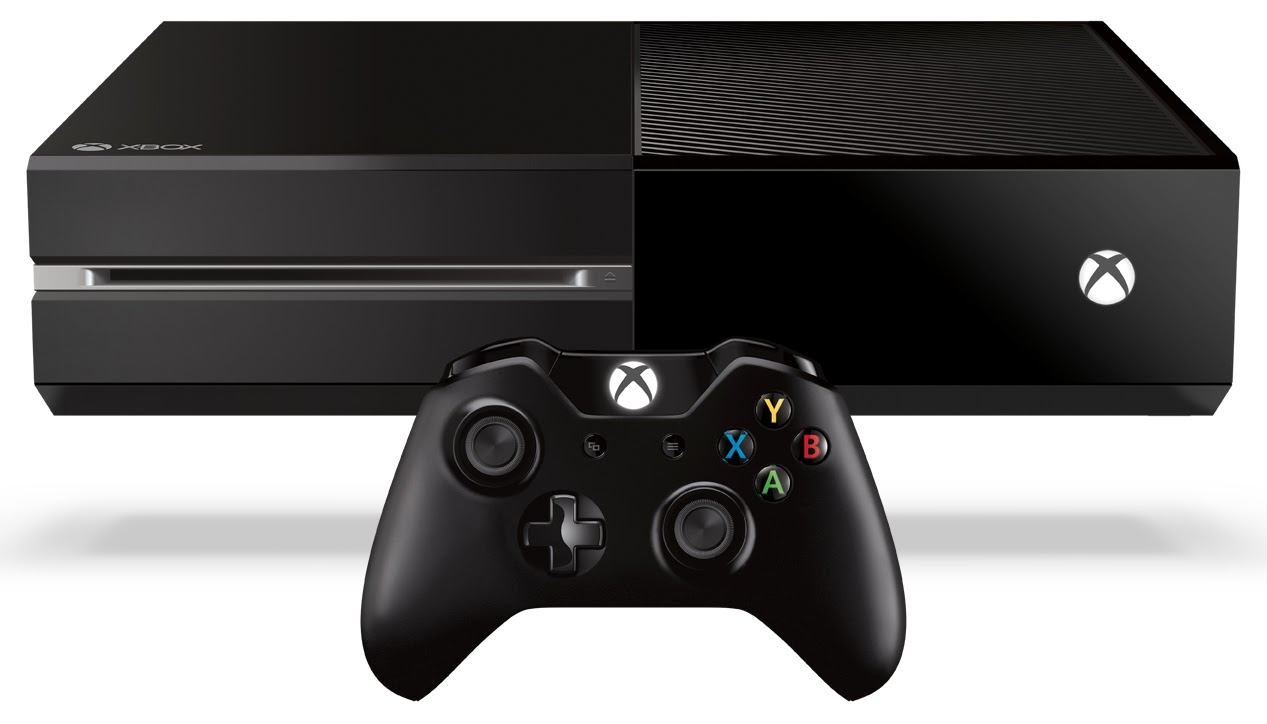


   It's widely agreed that the major competition is between the Xbox One and the PS4 and has been a subject of widespread discussion and dispute for a long while. The Xbox One was released November 22 in 2013, with the PS4 following shortly after on the 29th (EU). Both sold extremely well in the months to follow, but one sold slightly better than the other, with the PS4 to Xbox One now sitting at ration of 1.5:1 of sales in the UK.  Consoles have come a long way, and are improving and growing all the time. Looking at some of the newer games for the recent 8th gen consoles, they are absolutely beautiful. I also still find quite a lot of charm in the old consoles though, and I think it is a good idea to still revisit these often, as they are a strong nostalgic reminder and there is much we can still learn from them. 


References:
  • http://en.wikipedia.org/wiki/History_of_game_consoles_(sixth_generation)
  • http://venturebeat.com/2013/05/17/consoles-that-wont-die-the-sega-dreamcast/
  • http://en.wikipedia.org/Playstation_2
  • www.computerandvideogames.com/131066/hardware/the-complete-history-of-xbox/
  • www.wikipedia.org/wiki/xbox
  • www.nintendo.co.uk/corporate/nintendo-history/nintendo-gamecube-627129.html
  • www.en.wikipedia.org/wiki/wii
  • www.en.wikipedia.org/wiki/xbox_360
  • www.techradar.com/reviews/gaming/games-consoles/xbox-360-703247/review
  • www.en.wikiedia.org/wiki/Playstation3
  • www.nintendo.co.uk/wii-U/Hardware-features?Hardware_Features_660145.html
  • www.theguardian.com/technology/2014/jan/31/wii-U-mobile-nintendo-video-game


Sunday, 17 November 2013

Architectural Brief


   So.. the four weeks we've had for our architectural project have drawn to a close. I finished this a couple of days ago, and although it's not amazing, I am quite pleased with what I have achieved.
 
   My biggest regret about this piece is that I feel I wasn't ambitious enough with my choice of building. I just chose this cute little pub called the King's Head. This thought didn't really occur to me until I was halfway through the mesh. I'm bad enough with stress as it is, and I didn't want to risk going back and finding something else, only to run out of time to do it. I regret this now, however only slightly, because I came across hurdles across the way, which may have prevented me getting it done on time had I gone back to make something larger. I decided that instead, I'd try and add details to make the mesh more interesting, such as lights, satellite dish, etc.
   The UV unwrapping for this mesh caused me much more headaches than it probably should have.. Thing kept going wrong or I'd have to edit parts of the model and reset my UVs. I did end up learning a heck of a lot from this though, so even though it was a pain at the time... I'm glad of it now.
   The tiling textures I actually really enjoyed. Well... I enjoyed the bricks and the roof tiles... I found the grouting incredibly difficult, as you can see by the tiling still on it. Creating all of the textures took a while, but it was worth it seeing it all on the building.
   Once I'd put all the textures on, I decided to make an alpha for the the sections connecting the lamp to the building and I was really pleased with the results. So after that I added a plane and put an alpha on to display the sign on the building.
   At first I found applying normal maps quite difficult. I used a tutorial off blackboard to figure out how to do it, and I followed it to the letter and it still wouldn't work for some reason. I was in the labs at the time and I wasn't the only one struggling with this problem. We were saved though when a helpful second year student showed us what had gone wrong, and it was as simple as changing how the materials are shown in viewport.

   So overall, I am really quite pleased with how this came out. It's simple, but I think the textures and the normal maps made it look a lot better.


Friday, 8 November 2013

Critical Studies: Then to Now... Part Two

'The Middle Ages'

   The 1950s saw the first time computers being used for recreational purposes. Up until this point, computers had mainly been used for calculations, or, for example, decoding messages during the war.


   In 1958, a man called William Higinbotham created one of the first games, called 'Tennis for Two' and was created using an oscilloscope and analog computer. It was a simple side view of a tennis course, for two players. This just makes me smile. The advancements are amazing, and at the time this must have been a really exciting development. I can imagine that it would get boring fairly quickly though...


   'SpaceWar!' was invented in 1962 by Steve Russell for the PDP-1. The PDP-1 was the first operating system to allow multiplayer, so playing spacebar was more interactive and fun. The players would play against each other, controlling their ships with two boxy controllers. Here's a video of some 'SpaceWar!' gameplay!


   Looks fun right? The point of the genre is that two players are pitted against one another, controlling spacecrafts. There's a sun in the middle which provides great difficulties for the players as they fire missiles at one another, avoiding it's gravitational pull. SpaceWar! is quite a feat of an achievement, often credited as the first widely available and influential computer game!


   Computer Space, based on Space war, was the first ever arcade game. It was created in Nolan Bushnell (who would later start Atari Computers in 1972).
   There were two versions of Computer Space, a one player machine and a two player. In the one player version, the player controls a rocket ship in a face off against two spaceships, whereas in the two player version, two players battle one another.

Pong


   Here, you can have a go at a version of Pong! Probably famous as one of the symbols of classing computer games, it was originally a training device set by Nolan Bushnell for an Atari employee, Allan Alcorn. Atari was first made as a single arcade machine and put in a pub, and it became so quickly successful that Atari started to mass produce them! 


   Playing it.. it's actually incredibly easy to see why it became so popular. It's simple, but consider how advanced it was at the time! It's strangely addictive, and actually quite fun, and I wish there was more of this now. I wish that it was still the case that you'd pop down the local and there'd be pong or even maybe a PacMan machine.

PacMan 


   PacMan.. the immensely famous, world popular symbol of 80s Pop Culture. PacMan was developed by Namco in 1980 and sold over 100,000 units in its first year. 
   Everyone's heard of PacMan and most people have played a version of it at some point during their lives. It's very easily argued that PacMan is one of the most popular video games in history. 


   It's easy to see why this was so exciting and entertaining to play. There was an introduction of characters, and with the release of Ms. PacMan in 1981, a direct introduction of girls to the world of gaming.


The Magnavox Odyssey

   The Magnavox Odyssey was the machine that introduced the world to home gaming. Designed by Ralph Baer and made available in 1972, it was a digital video game console plugged into the television and controlled by two paddles. It was also released with six cartridges to play twelve different games (one of which, incidentally, being Pong).


Emerson Arcadia 2001

   In 1982, Emerson Radio Corp released the arcadia 2001 console, and a lot of trouble followed this for them...
   Arcadia 2001 was small and powered by a 12 volt power supply, meaning it could be used in vehicles. This would have been a fantastic launch into portable gaming... if it weren't for the face that it required a portable television... no common thing in the 80s, funnily enough.
   Its release wasn't exactly well timed either, as it came out at the same time as the much more popular Coleco Vision and the Atari 5200.

The competition.. the Atari 5200

   Meanwhile, Atari released the Atari 5200. These included an analog joystick, and the controller allowed a full 360 degree movement, however there were troubles with this and the controllers were very failure prone. The 5200 was also one of the first controllers to come with a pause button (What. I would be so lost without that thing.. trips to the fridge would inevitably end in death and disaster...)
   The Atari 5200 was thrown ahead of its competition though, because it had a lot more good quality games that other systems of that year. Unfortunately, the Atari 5200 was short-lived because of the great computer game crash of '83.

The Crash

   There were quite a few contributing factors to the crash in the gaming market in 1983. This article from IGN is a pretty interesting read into some facts about the crash.


   As it says in this article, one of the main reasons for the crash was an oversupply in consoles on the market. There was the Emerson Arcadia 2001, Atari 5200, the Coleco Vision and many others. Also as Computer gaming became more prominent as home computers became more affordable, these consoles had even more competition.

NES


   The courageous release of the Nintendo Entertainment System is what brought gaming consoles back after the crash. Originally the 'Famicon' in Japan, Nintendo sold the console in America as the NES and it took off in leaps and bounds. No wonder! When the world was being introduced to classics like Legend of Zelda and Super Mario Bros.


The NES controller, a horizontal block that you hold with both hands has become the standard design used for all consoles nowadays pretty much, with the directional keys on the left and action buttons on the right, with a start and select in the middle.

Nintendo Gameboy

In 1989, Nintendo released the pocket sized revolution for gaming, the Gameboy. The Gameboy offered the opportunity for portability to already much loved classics, such as Super Mario Bros and Zelda, and would also be the leap into the Pokemon gaming franchise. The Gameboy, the first in the Gameboy series, is what we have to thank for our current Nintendo handheld feat, the 3DS. 


The Gameboy and Gameboy Color progressed to the Advance and SP, the games for which could still be used in the Nintendo DS and DS Lite. From the DS lite came the DSi, and we've steadily risen to the 3DS, which still has the fundamental charm and lovability of all of its predecessors.

References

  • inventors.about.com/library/blcomputer_videogames.htm
  • iventors.about.com/od/sstartinventions/a/spacewar.htm
  • www.arcade-museum.com/c/computer_space.html
  • www.ponggame.org
  • pacman.com/en/pac-man-history/
  • en.wikipedia.org/wiki/magnavox
  • en.wikipedia.org/wiki/arcadia_2001
  • atariage.com/5200/
  • www.nintendo.co.uk/Corporate/Nintendo-History/Nintendo-Entertainment-System/Nintendo-Entertainment-System-627024.html